

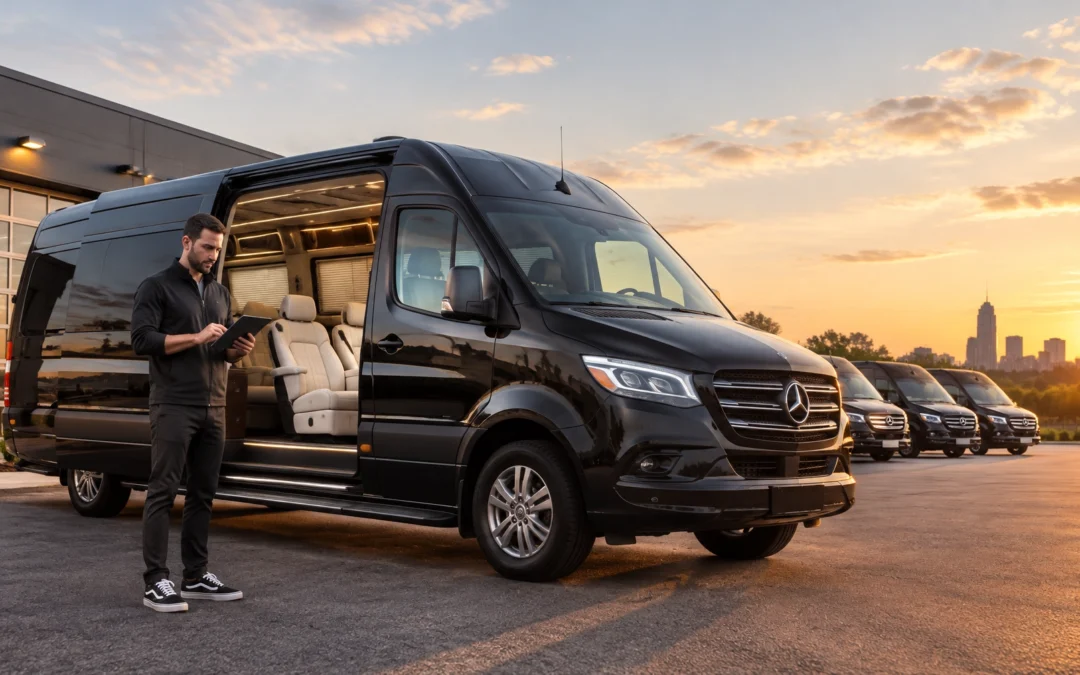
Starting a Sprinter van rental business can look simple from the outside: buy a van, post a few photos, and wait for bookings. The real work is building a business that can keep vehicles safe, available, insured, and profitable through busy weekends and slow seasons.
At GTG Sprinters, we operate a luxury Sprinter fleet out of Ohio. Here are the practical decisions we’d want any new operator to think through before investing.
1. Decide what business you’re actually in
First choose whether you’ll offer self-drive rentals, chauffeur service, or both. They may use similar vehicles, but they have different operating demands, insurance needs, and rules.
With self-drive rentals, your customer drives. It can be the simpler model to launch, but you’ll compete with other rental companies and need reliable processes for screening drivers, documenting condition, and managing damage. At GTG Sprinters, renters must be 25 or older and provide proof of insurance; if you set similar requirements, make sure your insurer and rental agreement support them.
Chauffeur work can bring higher revenue per booking, particularly for corporate travel and special events, but it also means hiring and vetting drivers, managing schedules, and arranging insurance for a for-hire operation. Your target customer matters, too: corporate travel, weddings, concerts, sports, airport transfers, bourbon trail trips, or production crews each have different booking patterns and service expectations.
2. Choose vans that fit your customers
The Mercedes Sprinter is a familiar platform for luxury group travel, but the right configuration depends on what you plan to sell. Don’t buy a build-out just because it looks impressive, make sure it matches your likely bookings and operating costs.
- Executive Coach: An intimate luxury setup with six plush captain’s chairs plus one up front. This works well when comfort, space, and a premium cabin matter more than maximum passenger count.
- Elite Plus: A higher-end option for customers looking for a standout luxury Sprinter van rental or executive Sprinter rental experience.
- 14-passenger van: A practical choice for larger groups and volume-focused bookings. It may suit events and group transportation, though the cabin experience differs from a captain’s-chair layout.
For a luxury build, look for captain’s chairs, a TV, and power outlets. For more capacity, bench seating may make better use of the cabin. Review the seating configuration and vehicle specifications carefully, and confirm how the final build affects registration, insurance, and any applicable operating requirements.
A used, low-mileage van can reduce your initial investment compared with buying new, which typically involves more depreciation early on. But don’t judge a used van by its odometer alone: review service records and confirm that maintenance was done on schedule. A worn interior or cosmetic body damage may be manageable if the mechanical condition is sound and the purchase price reflects the work needed.

3. Inspect before you buy, and before every rental
A polished cabin can hide expensive problems. Ask for service records and oil-change history, then have a mechanic familiar with Sprinters conduct a pre-purchase inspection.
Pay particular attention to:
- Diesel DPF/DEF and emissions systems, plus transmission behavior.
- Brake and tire life, and rust around the wheel wells and rocker panels.
- Water intrusion, roof seams, and front and rear air-conditioning performance.
- Electrical systems, the inverter, seat condition, and cabin equipment.
- Whether the odometer and service history make sense alongside the van’s reported use.
After purchase, keep the same discipline in your rental operations. Use a documented pre-rental inspection, then complete a post-return walkaround with dated photos. Consistent records help you catch maintenance issues early and give you a clear condition record if there’s a damage claim.

4. Price the whole booking, not just the day
A rate card is better than building every quote from scratch. Set clear rates and terms for the factors that change the cost:
- Van class and the self-drive or chauffeur service.
- Day rates versus hourly service and minimum booking times.
- Mileage caps, overage fees, and delivery or pickup charges.
- Event dates when demand, staffing, or logistics may add cost.
Build enough margin to cover insurance, maintenance, cleaning, downtime, and depreciation, not just the loan payment. Your pricing should reflect the vehicle’s availability and the work required to turn it around between bookings. Rates vary by market, season, vehicle, and service model, so use local competitor research and your own cost model rather than treating any published figure as a universal benchmark.
Avoid racing to the bottom. A low rate that leaves no room for upkeep can turn one repair or slow month into a serious problem.
5. Get insurance made for the business
A personal auto policy is not a substitute for commercial auto coverage written for a rental fleet. Explain your actual use to an insurance broker, including whether customers drive, whether you provide chauffeurs, passenger capacity, and where the vans travel.
Ask about primary liability limits and physical-damage coverage for your fleet. Telematics or GPS can support theft recovery and driver accountability; disclose their use and include appropriate terms in your paperwork. If you take custody of customers’ vehicles, ask whether garagekeepers coverage applies to that exposure. It does not replace physical-damage coverage for your own rental vans.
The Graves Amendment, 49 U.S.C. § 30106, generally limits vicarious liability for a rental vehicle owner when a renter causes an accident, provided the owner was not negligent or criminally wrongful. It does not remove your responsibility for your own negligence or override state insurance requirements. Read the statute, and remember the practical rule: talk to a broker who writes rental fleets. This is not the place to improvise.
6. Put the rules, and the business setup, in writing
A rental agreement should be reviewed by a qualified attorney and clearly explain:
- Renter identity and driver’s licence verification, plus proof of insurance.
- Mileage limits, fuel policy, deposits, and damage responsibility.
- Cleaning and smoking fees, prohibited uses, and late-return terms.
- Any additional-driver rules and the process for reporting an accident.
- A signed walkaround or condition report at pickup and return.
The agreement is only one part of the setup. Check whether you need an LLC, EIN, state or local rental and dealer licences, sales or rental taxes, and zoning approval for fleet parking. Requirements vary by jurisdiction, so confirm them with the relevant agencies where you’ll operate.
If you’ll provide for-hire interstate passenger service, don’t assume rental rules cover you. Depending on how the service operates, USDOT registration and other FMCSA requirements may apply. The FMCSA guide to small passenger-carrying vehicles explains that requirements vary based on vehicle capacity and compensation. Get advice for your specific setup before taking bookings.
7. Market a niche, not just a vehicle
A common weak spot is trying to market to everyone. Pick a clear customer and make it easy for them to see how your service fits their trip. You might focus on corporate travel, weddings, concerts, sports, bourbon trail outings, airport transfers, or production crews.
Then build the basics:
- Create local and event-specific website pages that answer what customers search for.
- Ask every satisfied customer for a review.
- Photograph the cabin well: customers are choosing the ride inside, not just the van outside.
- Build referral relationships with wedding planners, hotels, corporate travel managers, and event venues.
- Offer a repeat or loyalty rate for business clients whose bookings return throughout the year.
For examples of how a fleet can organize location and event pages, explore GTG Sprinters’ service-area pages and Keeneland transportation page.
8. Build systems before the calendar fills up
Reservation software should show availability clearly and leave buffer time between bookings for cleaning, inspection, and unexpected delays. Set written procedures for fuel and tolls, damage documentation, maintenance scheduling, and cleaning turnaround.
A van double-booked, or handed over dirty, can cost more in lost trust and poor reviews than you gain from squeezing in one more rental. Reliable operations are part of the product.

9. Be honest about the investment and the risks
This is a capital-intensive, regulated business, not passive income. A realistic small-fleet startup plan can run well into six figures, depending on vehicle costs, configuration, insurance, parking, and local requirements. Treat that as a broad planning consideration, not a quote or a guaranteed industry benchmark.
Insurance can be one of the largest recurring costs per vehicle. A poor renter, a missed service interval, an unexpected repair, or a van out of service during peak season can erase a season’s profit. Start with a clear operating plan, budget for downtime, and make sure each van has a role before adding more vehicles.
10. Consider licensing instead of starting from zero
Here’s something worth knowing before you build everything above yourself: GTG Sprinters now offers licensing of our company in select markets.
That means you can skip the part where you learn every lesson the hard way. Instead of discovering your own answers to insurance placement, contract language, inspection standards, pricing structure, and how to market a fleet, you start with systems that already work. Save yourself the hassle of learning from your mistakes and learn from ours instead.
Licensing makes the most sense if you want to operate a luxury Sprinter business without spending your first year reinventing the wheel. Markets are limited, so it’s worth asking early whether yours is available. Reach out to GTG Sprinters to talk through what licensing looks like in your area.
The takeaway
A successful Sprinter rental operation is built on the right business model, carefully chosen vans, thorough inspections, sound coverage, clear contracts, and dependable systems. We’re happy to talk with people considering the business. And if you’re looking for a Mercedes Sprinter rental, executive Sprinter rental, or 14 passenger van rental for your own trip, reach out to GTG Sprinters.